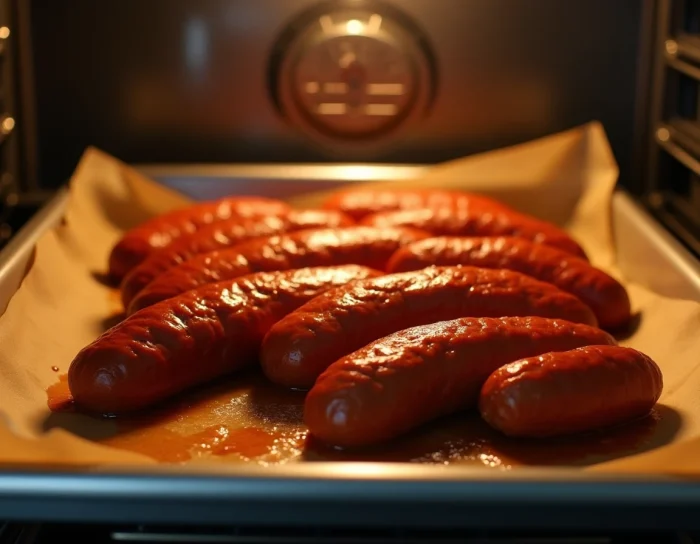
Baking merguez poses a specific thermal problem: the natural casing poorly retains steam once the ambient temperature exceeds a certain threshold, and the internal fat drains too quickly if the heat is frontal. We observe that most guides simply provide a temperature and cooking time without addressing the dynamics of heat transfer that make all the difference between a juicy sausage and a dry tube.
Gentle Cooking of Merguez in the Oven: The Two-Phase Protocol
The gradual increase in temperature is the main technical lever. Placing merguez directly in a hot oven causes a rapid contraction of the surface proteins, which expels the juice and fat before the center is cooked. We recommend a distinct two-phase protocol.
The first phase involves cooking the merguez in a preheated oven between 120 and 140 °C. This temperature range allows for a slow and even rise in heat to the core, which reduces casing bursting and internal fat loss. Expect a significantly longer duration than traditional cooking, but the result in juiciness is incomparable.
The second phase is a brief stint under the oven grill, in the upper position, to achieve browning and a slight crispness on the surface. This flash of intense heat is too short to dry out the meat, provided you monitor closely. Before baking merguez in the oven using this method, ensure that your upper grill operates independently, which is not the case for all entry-level ovens.
Internal Temperature of Merguez: Food Safety and Juiciness
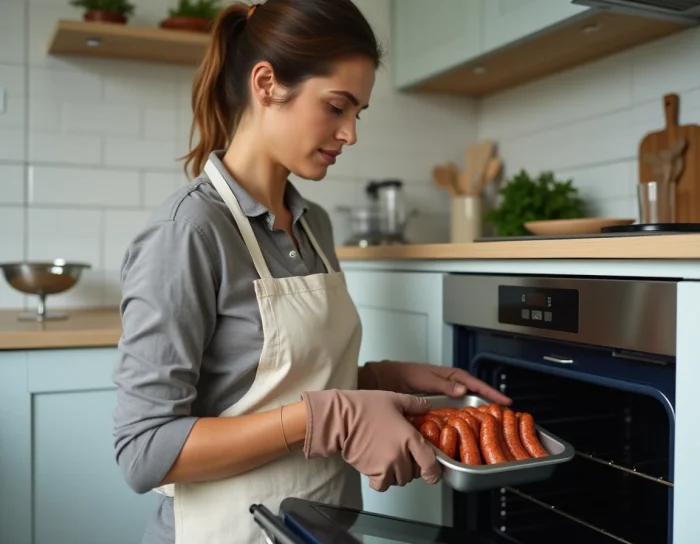
Merguez are raw minced meat sausages. ANSES and Santé publique France remind us that cooking to the core is essential to limit risks associated with E. coli and Salmonella. For the general public, this means no pink coloration at the center.
The common trap is to extend cooking well beyond this safety threshold out of excessive caution. Every additional minute past this point exponentially accelerates the loss of juiciness. Using a fine probe thermometer, inserted horizontally into the center of the merguez, is the only reliable way to monitor this parameter without repeatedly opening the oven.
Greatly exceeding the core cooking threshold dries out the meat without enhancing safety. Remove the merguez from the oven as soon as the probe confirms they are cooked, then let them rest for two minutes on the dish: the residual heat finishes the job without further evaporation.
Preparing the Dish and Managing Fat in the Oven
The choice of cooking support directly influences the result. A rack placed over a shallow dish (like a drip tray) remains the most effective configuration. The fat drains away, the merguez do not bathe in their juices, and hot air circulation remains even around each sausage.
If you use a dish without a rack, line the bottom with a thin layer of thickly sliced vegetables (onions, zucchini, peppers). They serve three functions:
- Elevate the merguez to prevent them from cooking in their own melted fat, which softens the casing and prevents browning
- Absorb some of the cooking juices and create a ready-made side dish, flavored with the spices of the merguez
- Generate gentle steam during the low-temperature phase, which maintains a favorable humidity level inside the oven
Space the sausages at least two centimeters apart. Merguez stuck together create a stagnant steam zone that prevents browning and prolongs overall cooking time.
To Pierce or Not to Pierce Merguez Before Baking
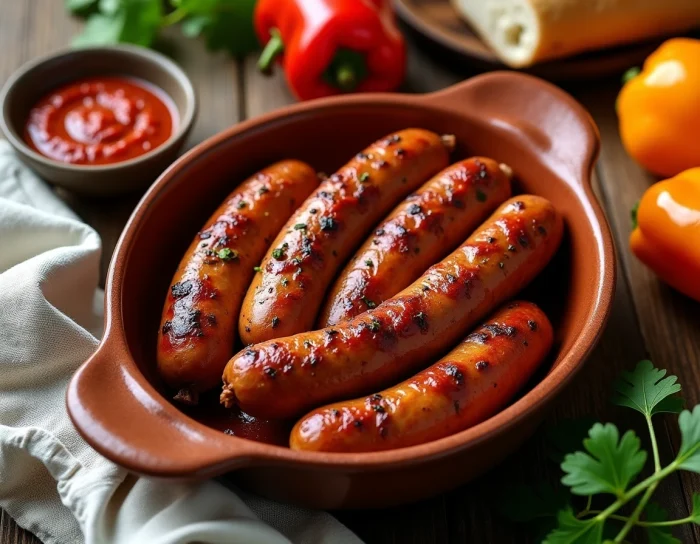
Do not pierce the casing before baking. This is the most counterproductive reflex for oven cooking. The natural casing acts as a semi-permeable membrane that regulates the release of internal steam. Piercing it creates escape points through which juice and fat escape within the first few minutes of heating.
The classic argument for piercing (to prevent bursting) only holds for very high-temperature cooking or direct flame barbecues. With the two-phase protocol described above, the gentle rise allows the casing to gradually expand. Bursting becomes a non-issue.
If the casing does burst despite everything, it usually indicates a poorly calibrated oven or insufficient preheating during the low phase. Check the actual temperature with an oven thermometer: the difference between the displayed temperature and the actual temperature often exceeds ten degrees on older appliances.
Merguez in the Oven and Side Dishes: Simultaneous Cooking on One Dish
Direct Cooking Vegetables
Quartered potatoes, carrots, or pieces of squash handle the low-temperature phase well. Add them from the start, seasoned with a drizzle of olive oil and cumin. They will absorb the flavors of the merguez throughout the cooking time.
Preparing Sauces and Condiments During Cooking
Take advantage of the gentle cooking time to whip up a yogurt sauce (plain yogurt, lemon juice, fresh herbs) or a harissa diluted in a bit of broth. These cold preparations contrast with the fat of the merguez and rebalance the plate.
- A yogurt-mint sauce adds freshness and cuts the spiciness of the merguez spices
- Finely steamed semolina absorbs the remaining juice in the dish, which constitutes a concentrated flavor
- Red onion pickles in apple cider vinegar add an acidic note that enhances the whole
Baking merguez in the oven, when based on a gentle phase followed by a flash under the grill, produces a result that a pan or barbecue struggles to match in consistency. The probe thermometer remains the tool that separates controlled cooking from random cooking. It is better to remove the sausages one minute too early and let them rest than one minute too late with no recourse.