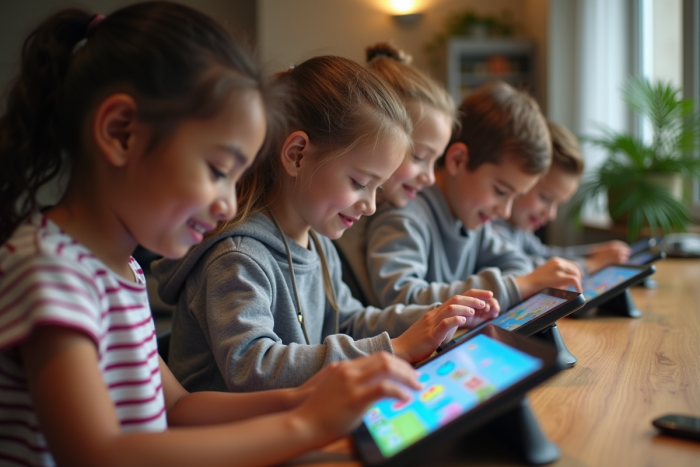
In 2023, 85% of primary school teachers in France report using at least one digital platform to enhance learning. However, the majority of downloaded applications are only used for two weeks before being abandoned. The gap between the abundant supply and actual usage raises unexpected questions about the effectiveness of the available tools.
Recent studies show that the optimal age to introduce gamification varies by subject, challenging the idea of a one-size-fits-all solution. Some games designed for young children prove to be more beneficial for struggling teenagers.
The Gamification of Learning: Why Online Educational Games Are Becoming More Popular
It is impossible to ignore the rise of online educational games. This popularity is no coincidence: gamification shakes up the school routine, awakens curiosity, and encourages active participation rather than passive observation. Neuroscience confirms what many have sensed: educational games stimulate memory, sharpen thinking, and develop decision-making skills. The classroom, once a place for recitation, becomes a true laboratory of experiential learning where the student takes the lead.
Teachers find a powerful lever to encourage autonomy, creativity, and resilience. Sometimes inspired by Montessori pedagogy, they place play at the heart of the learning process. Far from being limited to the transmission of knowledge, educational games value failure as a driver of progress: you try, you fail, you try again. A notable example: the “Google game on the Year of the Snake” shows how a well-designed tool can capture attention while addressing cultural or environmental topics.
Accessibility is no longer a distant wish: educational games are evolving to address learning disabilities and facilitate inclusion. They open new pathways for learning and collaboration, both in the classroom and remotely. Parents and teachers see these tools as valuable resources to strengthen transversal skills: communication, fine motor skills, adaptability. Gamification thus emerges as a pillar of an active pedagogy and a learning approach aligned with today’s digital realities.

What Practices and Examples to Design Accessible and Effective Educational Games?
Creating a truly engaging, inclusive, and meaningful educational game requires going well beyond simple playful animation. It involves considering both the uses, specific needs, and varied learning contexts. To adapt to the diversity of students and situations, several formats coexist: video games, sensory materials, construction games, or digital platforms.
Here are the main levers to enhance the impact and accessibility of these tools:
- The personalization of the learning path through reward systems, visual progress indicators, or immediate feedback that motivates and makes the student an active participant in their progress.
- The integration of features tailored to different profiles: dyslexic children, autistic individuals, students with motor or visual impairments. Ergonomics, simplicity of instructions, color choices, and the diversity of interactions become central criteria.
- The use of platforms like Genially, Moodle, or Teams facilitates classroom integration and encourages collaboration between students and teachers.
Some teachers, like Marilyne Rivard or Romain Vincent, demonstrate that active pedagogy benefits from well-chosen playful tools. There are plenty of examples: the game “Save Your Planet” effectively raises awareness of environmental issues, while “Feelings” addresses the expression and management of emotions. Other video games, sometimes unexpectedly like SimCity or Assassin’s Creed, are repurposed to explore history, management, or logic, opening new horizons.
The success of these tools is built on experimentation, listening to real needs, and being grounded in the daily lives of learners. With each attempt, the educational game refines its ability to connect the joy of playing with the demands of learning. What if the next great advancement in education came from a simple desire to have fun?