A prairie vole does not simply participate in family life. In its case, the distribution of parental care disrupts the usual patterns attributed to the vast majority of mammals. And what can be said about those fish that entrust the guarding of the eggs to the males, reversing everything we think we know about traditional roles in reproduction?
Sexual dimorphism is not just a matter of size or color. It influences access to food, shapes how territories are occupied, disrupts social organization, and even affects survival strategies. Long perceived as self-evident truths inscribed in the marble of biology, these differences reveal, in reality, a complexity that cannot be confined to ready-made boxes.
Gender and sexual dimorphism in animals: understanding the multiple facets of differences between males and females
Sexual dimorphism leaves its mark on animal societies, far beyond what a mere glance reveals. For many species, males and females are distinguished not only by appearance but also by their behaviors, their survival tactics, and their roles within the community. Observing a group of birds reveals how the notion of gender in biology is part of a continuous evolution. In the peacock, for example, the famous male’s tail does more than attract: it is the spectacular expression of sexual selection in action.
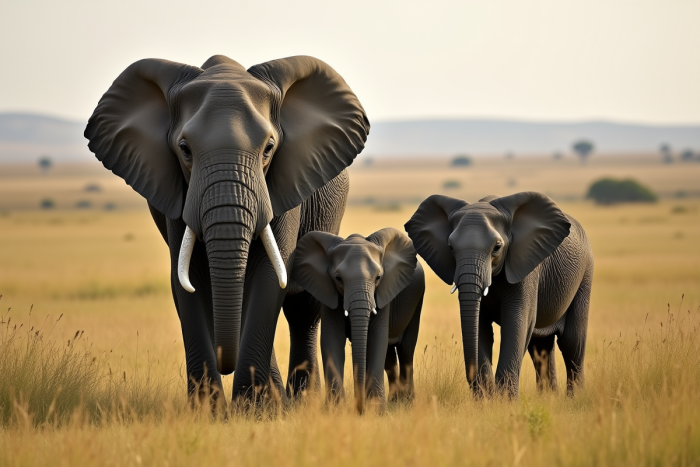
The question takes on a different dimension among mammals, where the relationship between males and females gives rise to sometimes unexpected social structures. Female elephants, the pillars of the group, take charge while young males drift away to form temporary alliances among themselves. From one species to another, the diversity of roles reveals a world far less fixed than one might think.
In some small rodents, determining sex is far from obvious. Take the sexual hamster, which sparks as much debate among researchers as it does among amateur breeders. It becomes clear that the characteristics of males and females are sometimes barely perceptible, inviting us to move beyond preconceived ideas and grasp the richness of biological and behavioral realities.
Here are some concrete illustrations of the variety of differences observed among species:
- In birds, plumage is distinctly different between males and females, sometimes displaying colors that are completely opposite to each other.
- Some fish completely overturn parental roles, leaving incubation to the males.
- In mammals, the organization of social life largely depends on the sex of each individual.
As scientists increase their observations, the diversity of differences between males and females becomes evident. We are far from fixed patterns: each species composes its own score, balancing cooperation, rivalry, and constant adaptation.
Gendered behaviors, social roles, and surprises in the animal kingdom: what ethology reveals about the diversity of strategies
Ethology, the art of observing and deciphering animal behaviors, unveils a diversity of social roles and strategies that shape the existence of each species. Behaviors vary profoundly, sometimes even within the same group, creating a patchwork of tricks for survival, reproduction, or territory protection.
Sexual roles are not limited to reproduction. Some female mammals collectively protect the young, while males compete for access to partners with loud calls or antler duels among deer. The dog, the quintessential domestic companion in France, also embodies the multiple variations of sex-related behaviors, shaped as much by natural selection as by human intervention.
To better understand the complexity of these dynamics, a few examples are necessary:
- Depending on the species of birds, nest building or incubation may involve both sexes or remain the exclusive domain of the female.
- In certain groups of monkeys, social dominance primarily relies on cooperation among females, overturning traditional models of male hierarchy.
Human sciences are taking these observations to untangle what is innate and what is acquired. By studying adaptation strategies, researchers sometimes encounter unexpected scenarios: reversal of parental roles in some fish, collective protection of young in elephants, matriarchal or patriarchal societies that challenge generalizations. Ultimately, even among animals, the boundary between “natural” behaviors and social constructs deserves to be questioned, in light of what research reveals each year.
Observing these differences means accepting to open the door to the unexpected and recognizing that nature does not concern itself with ready-made theories. The animal kingdom has not finished surprising us, and each species, each behavior, reminds us how diversity is crafted far from the beaten paths.