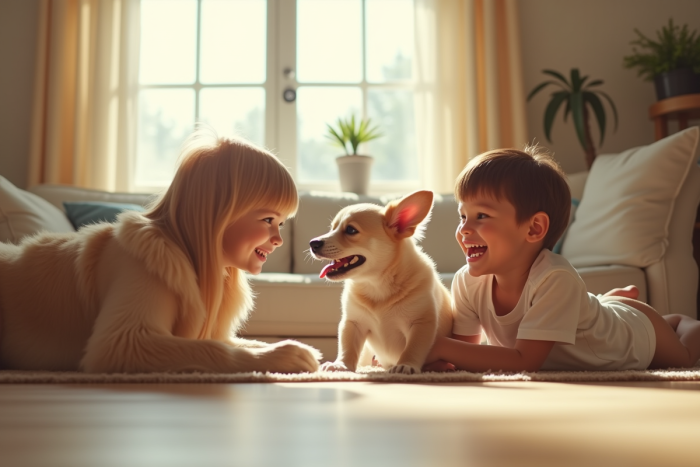
A raw figure, without beating around the bush: over five years, adoptions of certain previously niche dog breeds are skyrocketing in families with children. Shelters and breeders confirm it: the choices of the French are changing, the profiles are broadening, and household habits are being shaken up.
The family dog landscape is no longer limited to the labrador or golden retriever. Now, families are considering other criteria, scrutinizing ease of training, tolerance towards children, and a dog’s ability to thrive in both city and countryside settings. In light of this evolution, breeders and behaviorists are observing unprecedented trends, revealing a new way to integrate dogs into the heart of the home.
Why certain dog breeds are increasingly appealing to families with children
This rise of certain companion dog breeds is no coincidence. Families want a true daily companion, capable of accompanying children, supporting significant moments, and fitting into the family dynamic. Take the golden retriever: playful, patient, unfailingly loyal, it forgives clumsiness, learns quickly, and shows a rare loyalty.
The labrador retriever is no slouch either: sociable and affectionate, it blends into family life without causing waves. The beagle charms with its dynamism, curiosity, and love for play, making it a great match for energetic children. The poodle, for its part, attracts attention for its hypoallergenic coat, liveliness, and eagerness to learn. For those who prefer smaller breeds, the shih tzu stands out for its gentleness and patience, while the coton de Tuléar is gaining ground with its cheerful and sociable temperament.
One cannot overlook the growing interest in the dog Samsky. This companion, highlighted on the page ‘Dog Samsky: why this companion appeals so much to families – Blog Animaux’, perfectly embodies the current trend: adaptable, energetic without being excessive, and very gentle, it reassures parents while becoming a pillar for children.
Among the adoptions, we also find profiles like the Newfoundland, naturally protective, the affectionate Bernese mountain dog, or the Saint Bernard, known for its patience. They all share a common trait: their ability to integrate smoothly into family life. Choosing one of these favorite dog breeds is betting on a stable, close relationship where every family member finds their place.

Tips and key points for welcoming a dog suited to family life
Adopting a companion dog in a household requires preparation. Given the variety of dog breeds, it is essential to adjust your choice to the rhythm and desires of the household. The Australian shepherd, lively and clever, will delight sporty families ready to engage in multiple outings and games. In contrast, the French bulldog or Cavalier King Charles are perfectly content with apartment living and a more laid-back pace.
Here are some guidelines to make the right choice:
- Identify a breed that fits your daily life: the German shepherd needs to expend energy; the Bichon Frise or Japanese spitz are more comfortable in modest spaces.
- Consider the time to dedicate to training and activity: some breeds like the border collie or Irish setter require sustained presence and abundant energy.
- Reflect on the health and resilience of the dog: some lines are prone to specific issues, whether respiratory problems or bone fragility, requiring attentive veterinary care.
- Don’t overlook dog insurance: beyond accidents, it reflects a long-term commitment to your companion’s well-being.
The success of cohabitation relies on mutual adaptation. A Staffordshire bull terrier, loyal and reassuring, thrives in a stable environment. The Jack Russell, always ready to leap, energizes children but requires consistent training. Size, character, the dog’s history, and the household’s capacity to welcome: every detail matters. Investing in consistent training, early socialization, and a deep understanding of the breed’s needs opens the door to a peaceful shared life, rich in companionship and shared memories.