
Is Mike Tyson vegan, vegetarian, or simply an advocate of a controlled diet? This question frequently arises in searches related to the boxer. The dietary journey of the former heavyweight champion has gone through very distinct phases, from strict veganism to a conscious return to animal proteins. Comparing these different periods allows us to measure what has really changed on his plate, and why.
Timeline of Mike Tyson’s Diet: Compared Phases
Tyson’s nutritional journey is not just a before/after scenario. It is divided into at least three well-documented dietary periods, each serving a different purpose.
| Period | Type of Diet | Main Goal | Context |
|---|---|---|---|
| Early 2010s | Strict Vegan | Weight loss, detox, health | Hypertension, joint pain, addictions |
| Around 2020 (fight against Roy Jones Jr) | Return to animal proteins (bison, steaks) | Muscle mass and explosiveness recovery | Physical preparation supervised by Rafael Cordeiro |
| Recent Period | Flexitarian / controlled omnivore | “Clean” eating, overall sobriety | Limiting alcohol, sugar, ultra-processed foods |
This table highlights a point that many sources overlook: Tyson himself stated that he stopped being vegan, notably during an appearance on Joe Rogan’s podcast in 2020. The media narrative of the “boxer turned vegan” remains fixed on the period 2010-2015, while the reality has evolved since then.
To delve deeper into the topic surrounding mike tyson vegan or vegetarian, several analyses detail the nuances between these dietary labels applied to the boxer.
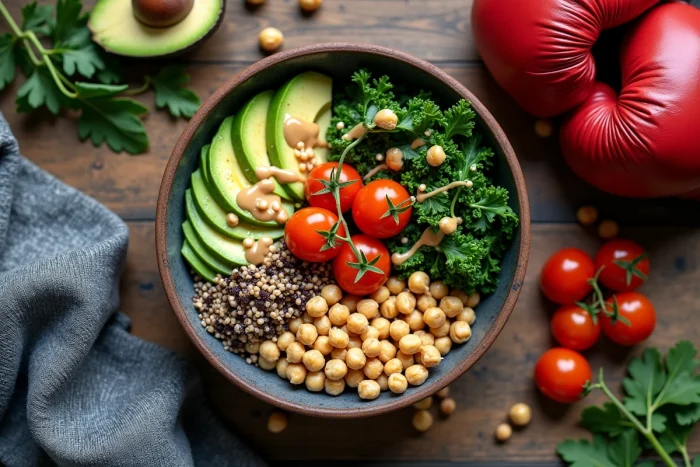
Tyson’s Vegan Diet: What the Plant-Based Phase Really Produced
In the early 2010s, Tyson suffered from hypertension, chronic joint pain, and respiratory issues. These conditions, combined with years of addiction, motivated a radical shift towards veganism. The most visible result: a loss of over 45 kilos according to the boxer’s own statements during an interview with Oprah Winfrey in 2013.
This plant-based phase was not originally an ethical or environmental choice. It was a response to a medical urgency. Tyson described this period as a form of overall detoxification, affecting both diet and substances.
Documented Benefits of This Period
- Significant decrease in blood pressure and improved respiratory function, according to Tyson’s statements in several American interviews
- Massive weight loss that reduced pressure on his joints, alleviating chronic pain
- Increased psychological stability, which Tyson associates more with sobriety than with diet alone
The takeaway: the health benefits came as much from detoxification as from veganism. Tyson himself emphasizes sobriety as a determining factor, more than the exclusion of animal products.
Return of Meat for the Roy Jones Jr Fight: Technical Reasons
For his preparation for the exhibition fight against Roy Jones Jr in 2020, Tyson reintroduced meat into his diet. His physical trainer Rafael Cordeiro explained that maintaining muscle mass was problematic with a 100% plant-based diet, particularly to regain the explosiveness needed in the ring.
Tyson then consumed bison and steaks, dense protein sources that facilitate muscle recovery after intense training. This pragmatic choice contrasts with the image of the vegan boxer that had been relayed for years.
However, this return to animal proteins does not mean a total abandonment of the principles acquired during the plant-based phase. Tyson has maintained a diet rich in plant foods while limiting ultra-processed products.
Flexitarian Rather Than Vegan: Current Position
Several American media outlets, including Men’s Health and GQ Sports, describe Tyson’s current diet as flexitarian or controlled omnivore. This term refers to a diet that combines animal and plant proteins without strict exclusion.
In his recent interviews, Tyson no longer claims the vegan label. He emphasizes three main points:
- Limiting alcohol and maintaining sobriety as a central pillar of his health
- Reducing sugar and ultra-processed foods in his daily life
- Describing his diet as “clean,” without any particular dogma regarding the animal or plant origin of proteins
This evolution shows that Tyson’s real health turning point is based on sobriety, not on a dietary label.

Vegan, Vegetarian, or Flexitarian: Why Labels Don’t Fit Tyson
Labeling Mike Tyson as “vegan” in 2025 is an oversimplification. He was vegan for several years, with measurable results on his health. He has not been since at least 2020, and does not claim to be.
The confusion persists because Tyson’s vegan period generated massive media coverage. His appearance on Oprah Winfrey, his statements about weight loss, and his physical transformation have cemented this image. Subsequent updates (Joe Rogan podcast, Men’s Health articles) have received less attention.
Tyson’s journey illustrates a nutritional reality that labels oversimplify excessively. His diet has always responded to a specific goal: medical survival first, performance next, balance in daily life today. Each phase has produced results consistent with his constraints at the time, without any one phase defining his relationship with food on its own.