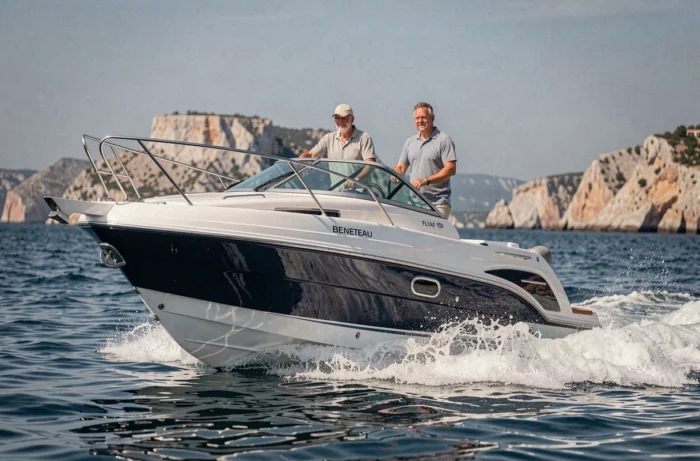
When looking for a day boat capable of handling a morning fishing trip, a midday swimming stop, and a sporty return against the chop in the afternoon, compromises come quickly. The Beneteau Flyer 8 is one of the few models in its category that keeps this promise without sacrificing one use for another.
Its pronounced V-shaped hull, two configurations (Sundeck and Spacedeck), and compatibility with engines ranging from 250 to 300 hp make it a versatile outboard, but the choice of version and equipment needs to be weighed before purchase.
Engine Options for the Flyer 8: How Engine Choice Affects Daily Use
The behavior of the Flyer 8 varies dramatically depending on whether you choose a 250 hp or a 300 hp engine. With the lower power option, the boat remains pleasant for cruising, but acceleration out of turns or recovering against a formed swell requires a bit of patience.
With 300 hp, the responsiveness shifts to a different level. The planing is more pronounced, and crossing the chop can be done at lower RPMs, which reduces the vibrations felt by passengers. However, fuel consumption increases significantly, and the annual maintenance budget follows the same trend.
Feedback varies on this point, but several owners of 250 hp Flyer 8 Spacedecks believe that this power is sufficient for a family coastal outing. The 300 hp is more justified for those who engage in water skiing, wakeboarding, or regularly navigate in exposed areas. You can learn more on the E-Vacances website to compare the available configurations based on intended use.
Sundeck or Spacedeck: Two Boats in One Hull
The choice between Sundeck and Spacedeck is not just an aesthetic question. It determines the complete organization on board and the type of days spent at sea.
Flyer 8 Sundeck: Sunbathing as the Center of Gravity
The Sundeck version features a cabin with sleeping space and a double sunbathing area at the front and rear. This configuration prioritizes relaxation and hospitality. When boarding as a couple or with young children, comfort at anchor takes precedence over free deck space.
The cabin, even if compact, allows for storing belongings, changing a child, or seeking shelter from the sun. We are not talking about a true cruising cabin, but a functional space that makes a difference during a full day at anchor.
Flyer 8 Spacedeck: Deck Space and Water Activities
The Spacedeck sacrifices the cabin to free up a larger cockpit. The open rear deck facilitates launching a dinghy, paddleboard, or the passage of a water skier. For outings with friends focused on sliding sports, this version makes perfect sense.
The announced capacity varies according to certification and the exact version. In both cases, it is noted that the Flyer 8 offers more space on board than most outboards of comparable length, thanks to a well-utilized hull width.
Aftermarket Equipment on the Beneteau Flyer 8: The Real Purchase Criteria
The factory finishes provide a good base, but it is the equipment added after delivery that separates a pleasant boat from a truly operational one.
- An automatic trim system like Zipwake corrects the trim in real-time and improves comfort while navigating in chop, especially with an unbalanced load
- A bow thruster facilitates port maneuvers, particularly useful when sailing as a couple without a crew member to manage docking
- A recent antifouling and dry storage extend the lifespan of the hull and reduce friction, directly affecting fuel consumption
In the used market, a Flyer 8 with a documented maintenance history is worth significantly more than a recent model that has not been well maintained. Listings that mention a recently replaced thruster battery or antifouling done within the year indicate a careful owner, which is more reassuring than a simple list of original options.
Budget and Used Market for the Flyer 8: What to Expect
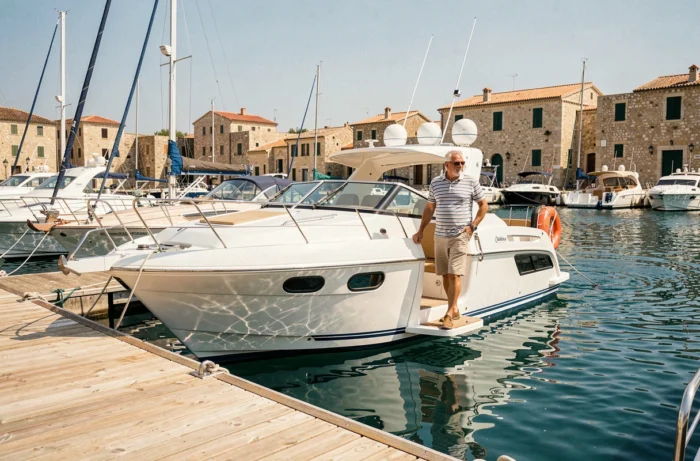
The price of a new Beneteau Flyer 8 starts at around 75,000 euros, but the bill quickly rises with engine and equipment options. In the used market, price dispersion is significant: you can find models from previous generations at very variable prices depending on the year, engine hours, and overall condition.
Some guidelines for evaluating a listing:
- The number of engine hours remains the primary indicator of mechanical wear, but it says nothing about the quality of routine maintenance (oil changes, impeller, anodes)
- A boat stored dry between seasons generally presents fewer osmosis and biological fouling issues than a boat that has remained afloat all year
- The generation of the model matters: recent Flyer 8s benefit from a design revised by Andreani Design, with finishes and cockpit layout that are more refined than earlier versions
A often overlooked point: renting a Flyer 8 before purchase allows you to test the boat in real conditions. Some rental bases in the Mediterranean and Brittany offer this model, but you generally need a coastal license and minimal sailing experience.
Behavior at Sea of the Flyer 8: What the Technical Sheet Doesn’t Show
The hull of the Flyer 8 offers a good compromise between stability at anchor and course holding at high speed. In navigation through formed seas, the V-shaped hull absorbs short chop without slamming, provided you maintain an appropriate speed.
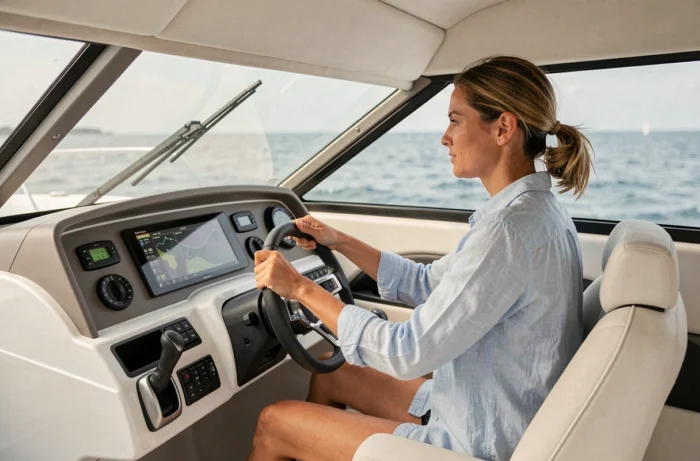
Steering remains accessible. The steering is responsive, well-supported turns do not destabilize seated passengers, and visibility from the helm covers the usual blind spots of day boats of this size. It is a playful boat that forgives steering approximations while rewarding careful piloting.
The Flyer 8 is not an offshore boat. Its purpose remains day outings, coastal cruising, and water activities near a shelter. Its value in the used market remains stable, a sign that successive owners recover what they invested in maintenance upon resale.