An airplane ticket to Tokyo is no longer essential to explore its museums or iconic neighborhoods. Some agencies are already seeing an increase in visitors thanks to immersive digital tours, while several tourist destinations are limiting physical access to their sites in order to preserve their heritage. However, despite the rapid rise of these experiences, half of the travelers surveyed say they prefer real travel, even in the face of increasingly sophisticated technological solutions.
The tourism sector is adapting, experimenting, but facing unexpected obstacles, balancing expanded accessibility and potential user frustration.
Virtual travel: a new way to explore the world without a suitcase
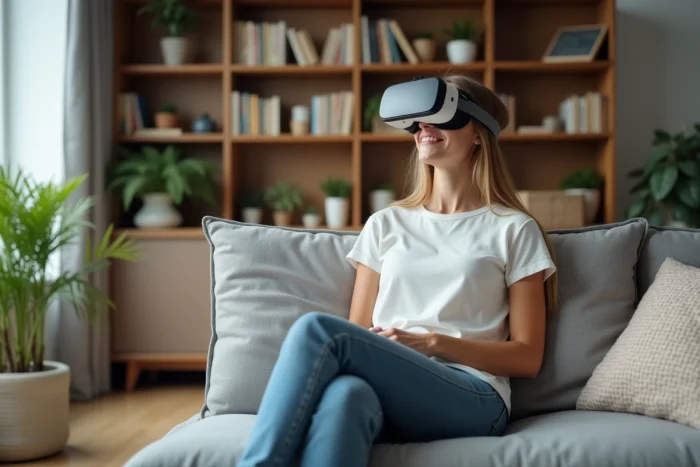
Virtual travel is transforming the way we discover destinations. Driven by virtual reality and immersive experiences, it allows anyone to visit a museum in Florence, fly over the temples of Angkor, or stroll through Lisbon, all from the comfort of their living room. A simple VR headset, a reliable connection, and the magic happens: here is an unprecedented panorama of virtual destinations, now promoted on a large scale by the travel industry.
For museums and historical sites, this leap into the digital realm opens the door to new visitors while protecting works and places that are fragile due to mass tourism. Remote individuals, students, or those with reduced mobility can finally access works that were previously inaccessible. Augmented reality offers an additional layer of information and reconstructions, making each discovery more tangible and vibrant.
Despite these promises, the virtual cannot do it all. The visitor remains deprived of physical sensations, natural sound ambiance, the unique grain of light, or spontaneous exchanges during a real trip. Immersion has its limits, and frustration sometimes arises: the advantages and disadvantages of virtual travel fuel debates among both professionals and the general public. The emergence of virtual reality transforms our relationship with the world, as much as it invites us to rethink the memory of travel and the emotions attached to it.
By disrupting the codes of escape, technology reconfigures the balance between what we gain—access, discovery, democratization—and what remains out of reach.
Virtual reality, tourist experience: concrete benefits and sticking points
The digital tourist experience opens up new possibilities. Access to previously inaccessible sites, limiting travel and carbon footprint, sharing culture from one corner of the globe to another. With virtual reality, it only takes a few seconds to cross the doors of a renowned museum or immerse oneself in a historical site, without waiting in line or managing a tedious journey. Students, art enthusiasts, or researchers now have modern tools to deepen their knowledge and broaden their horizons.
Here’s what this evolution makes possible for travelers as well as professionals:
- Heritage preservation is progressing: fewer physical visitors means less risk of alteration, while allowing for global access.
- Future tourists can prepare their stay through immersive scouting, refine their choices, and anticipate their discoveries in a much more precise way.
But not everything is keeping pace. Tactile sensations, scents, and temperature variations remain absent from the digital visit. The experience depends on the equipment, connection, or realism of the images. Haptic technologies and artificial intelligence are advancing, but the richness of a real walk, the surprise of a human exchange, or the unexpected on-site remains irreplaceable for now.
Immersive virtual reality redeploys the global tourism map, but does not reach the same intensity or unique emotion of being on the ground.
Complementarity or shift: where is tourism heading in the virtual age?
The boundary between virtual tourism and physical travel becomes increasingly blurred each year. Immersive experiences are attracting more and more curious individuals, but the desire to experience travel “in real life” does not fade. Certainly, virtual visits attract museums, exhibitions, monuments, but nothing replaces the real encounter with a place, a guide, or a local resident.
Industry professionals are adapting their offerings. Hotels are betting on an initial online discovery of their spaces, simplifying the preparation for the stay. Travel agencies are increasingly using augmented reality to refine itineraries or allow their clients to experience excursions before departure. Hybrid formulas combining the digital world and real on-site experiences are emerging.
Here’s how this coexistence is asserting itself:
- The virtual travel industry allows access to threatened heritage gems while protecting the real environment from the excesses of intensive tourism.
- The worlds of video games intersect with those of museums or theme parks, blurring the lines between learning, leisure, and entertainment.
Armed with these digital tools, tourism platforms and tech players are now betting on the complementarity of experiences and the personalization of stays. Travel then takes on new contours, shifts the lines of discovery, and leaves it to each individual to reinvent their own thirst for escape. It remains to be seen how far virtual reality will impose itself, or if the need for authenticity will always prevail.