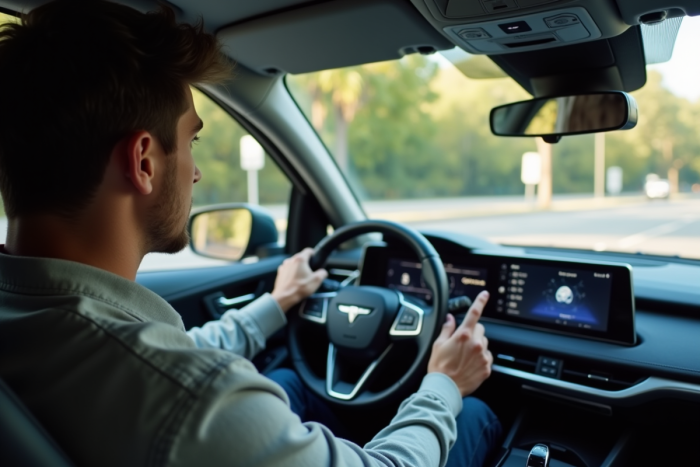
Installing a device in your car is no longer a trivial matter: for many drivers, it has become the key to a customized car insurance. Insurers are competing with ideas to attract connected motorists: discounts on premiums, high-tech gadgets onboard, dedicated mobile applications. The sector, long stuck on standard criteria, is now opening up to real-time analysis of driving habits. Every turn, every brake, every kilometer counts and influences the price to be paid.
Car manufacturers quickly sensed the trend. They are multiplying agreements with insurers to directly integrate these technologies into new models. This alliance is creating an unprecedented landscape, where personalization and prevention take precedence over simple compensation. Now, the relationship between driver, vehicle, and insurance is transforming: fewer surprises, more transparency, and a new feeling of regaining control over expenses.
Connected Drivers: Why Embedded Technology Changes the Game
It’s impossible to ignore the impact of embedded technology on car insurance. So-called connected offers rely on tools capable of recording speed, acceleration, braking, as well as the timing and frequency of trips. The insurer uses this data to establish a driving score, which has become the cornerstone of calculating the insurance premium. For the most attentive drivers, the bill can sometimes be halved: a true revolution for the wallet.
The “Pay As You Drive” or “Pay How You Drive” formulas cater to various profiles. Occasional drivers, young people getting behind the wheel for the first time, or those who prioritize smooth driving benefit from rates adjusted to their usage. The numbers speak for themselves: up to 50% off for those who tick all the boxes of responsible driving. The appeal is growing: 91% of French people say they are willing to change their behavior to reduce costs, and nearly all 18-24 year-olds adopt this reflex.
Beyond the financial aspect, safety also benefits. Connected car insurance helps reduce the frequency of accidents: -22% among young people, -31% for the rest of the insured. Personalized advice, accessible via an app, transforms the insurance contract into a true road companion. Major car brands, such as Mercedes-Benz or Stellantis, have already integrated these systems into their latest models.
The issue of privacy is not overlooked. The collected data is systematically anonymized, secured, and deleted after a few months, in accordance with the rules set by the CNIL. For those who wish to combine personalization with peace of mind, Qlara’s car insurance guarantees clear tracking and responsible management of personal information.
What High-Tech Gadgets for Cars Are Revolutionizing Car Insurance Today?
It’s impossible to talk about connected car insurance without mentioning the wave of embedded gadgets that reinvent the relationship between insured and insurer. The connected device, installed in the car, takes center stage. It captures a multitude of data: speed, braking, acceleration, turns, timing, frequency of trips. The insurer receives this information, develops a driving score, and then adjusts pricing based on actual usage.
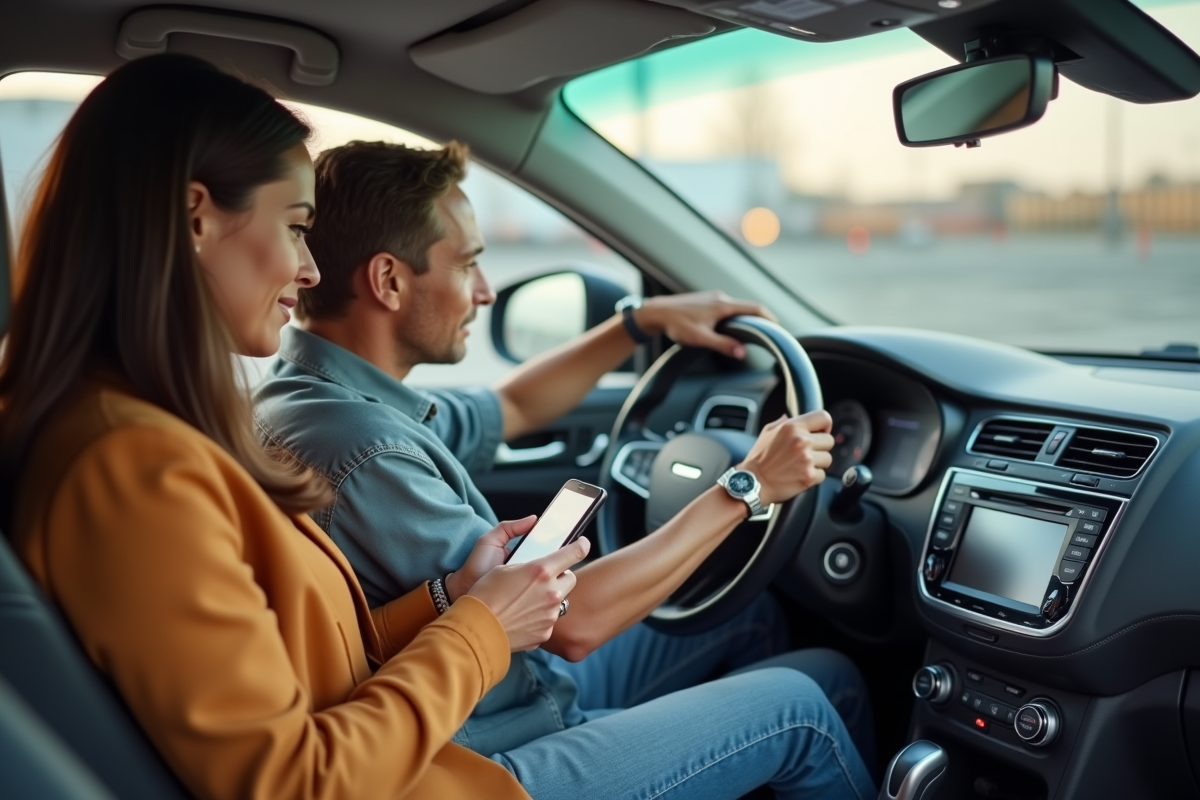
The mobile application complements the system. It provides immediate feedback on driving quality, offers personalized advice, and allows tracking of premium evolution. Some applications go further: they provide real-time vehicle tracking, send maintenance alerts, simplify claims management, and give access to the client area in just a few seconds.
Here are the main tools that are becoming essential in this new generation of car insurance:
- The connected device: it collects and transmits driving data in real-time.
- The mobile application: a true interface between driver and insurance, it provides personalized advice and information.
These technological innovations adapt to both electric vehicles and traditional models. They allow for coverage adjustments based on actual usage, obtaining attractive rates, and modulating the level of deductible. Insurers are focusing on clarity and education: everyone can visualize the impact of their driving on their coverage and the amount to be paid. Guarantees are evolving, formulas are refining, and the relationship with insurance is taking on a new face.
The connected steering wheel, the smartphone as co-pilot, insurance as a partner: the modern motorist is redefining the rules of the game. The road promises to be less unpredictable, but significantly more interactive.