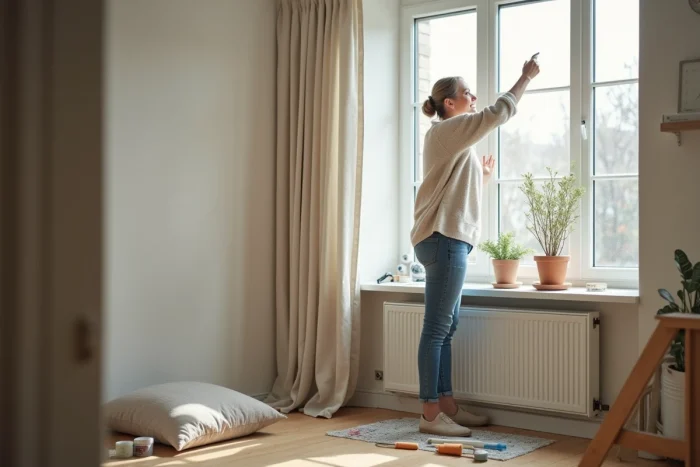
Changing a window without a permit can lead to a fine, except in certain classified villages where a simple declaration is sufficient. Insulating an exterior wall improves energy performance, but rarely increases resale value as most people think. A poorly redone bathroom seal causes more damage than a leaking faucet.
Layout mistakes are costly in lost space. Renovation costs vary according to the season and the type of craftsman, while financial aid often remains unknown or poorly utilized. Preventive maintenance extends the lifespan of equipment, but is neglected in more than one in two households.
Where to start when renovating your house or apartment?
Before starting work at home, it is essential to build a solid plan. Start by diagnosing: insulation, electricity, plumbing, roofing, nothing should be overlooked. List what cannot wait, what is urgent. Otherwise, the budget explodes, deadlines snowball, and quality is lost along the way.
To approach the renovation of a house, three principles must be followed: energy efficiency, compliance with regulations, and sustainable comfort. Energy improvement often comes first. Focus on insulation, track thermal bridges, inspect joinery and sources of heat loss. Programs like MaPrimeRénov’, eco-PTZ, ANAH, or CEE exist to ease the financial burden: inform yourself, compare, prepare the files. Each of these aids has its own rules, deadlines, and allocation ceilings. Also, check if a prior declaration or building permit is required for certain works.
Planning is key. Anticipate the order of interventions: structural work, networks (electricity, plumbing, insulation), finishes. A structured renovation avoids costly setbacks. Multiply quotes, compare, and choose certified craftsmen. The Maison Info website offers clear advice on aids, regulations, the sequence of steps, and common pitfalls.
In the face of rising prices and recent requirements, renovating demands method and vigilance. Site monitoring, budget adherence, and compliance with standards form the best assurance against disappointments.
Optimizing interior layout: ideas and tips for a space that reflects you
Thinking about interior layout means designing daily life to your liking. Every square meter utilized, better thought-out circulation, a well-placed ray of light: all elements that change the experience of the space. Layout is not an aesthetic whim; it adapts to the rhythm and needs of those who inhabit it.
In the kitchen, often the beating heart of the home, circulation must be clear. If the structure allows, open spaces facilitate exchanges and enhance conviviality. Sliding storage, smart work surfaces, multifunctional islands: every detail optimizes organization. In the bathroom, accessibility makes a difference. Walk-in showers, wall-mounted sinks, space-saving tips: everything counts for a functional space.
The choice of coverings sets the ambiance: parquet for warmth, tiles for durability, healthy paints for indoor air. Colors also modulate perception: light colors to enlarge, darker ones to add depth.
Here are some concrete ideas to further your reflection:
- Adapt the heating system to the insulation of the home: inertia radiators, underfloor heating, or heat pumps depending on the configuration.
- Pay attention to ventilation: an efficient VMC protects health and preserves materials.
Coherence relies on the careful selection of materials. Choose what lasts, requires little maintenance, and meets your needs. Interior layout is not just about aesthetics: it engages comfort, reduces energy expenses, and enhances the pleasure of living.
Smart renovation: tips for maintaining and modernizing without breaking the bank
Regular maintenance is the secret to a healthy and durable home. Quickly identify warning signs: leaks, displaced tiles, tired outlets. The longer you wait, the higher the bill climbs. It’s better to prevent than to repair in an emergency.
Renovating intelligently also involves simple and accessible actions. A coat of paint can breathe new life into a room for little cost. Second-hand joinery, found in recycling centers, can advantageously replace worn elements. Betting on reuse saves money, limits ecological impact, and adds character to your interior.
Today’s DIY enthusiast can rely on reliable tutorials or participate in workshops to learn how to lay tiles, renovate a floor, or create a terrace. Tools can be rented, mutual aid is organized, and the investment becomes collective.
Consider these concrete actions to combine maintenance and modernization:
- Ensure safety: regularly check alarms, smoke detectors, connected outlets, and other recent equipment.
- For the garden or terrace, prefer robust plants that require little water and recycled furniture.
Keep an eye on current programs: reduced VAT, NF standards, energy renovation aids. In France, modernizing your home also means enhancing your property. Targeted maintenance ensures the longevity of the investment and well-being day after day. A well-maintained house is one where the future is built without fear of unpleasant surprises.