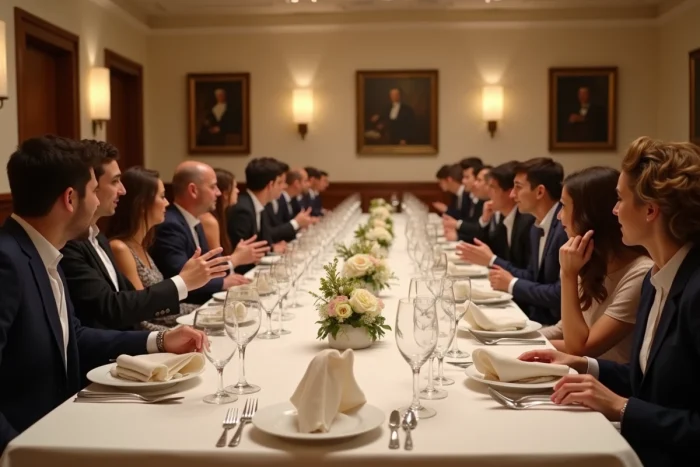
From 24 guests, the classic arrangement quickly shows its limits. The spaces between seats become critical for service circulation and the friendliness of exchanges. No universal scheme can avoid blind spots: each configuration imposes compromises between proximity, accessibility, and aesthetics.
The choice of furniture, the shape of the tables, and the placement of seats determine the efficiency of the reception. Managing technical constraints and individual expectations becomes a balancing act, far beyond the simple addition of chairs.
What are the stakes of a successful table arrangement for 40 people?
Organizing a reception for forty people is not just about placing seats around tables. The table arrangement for 40 people involves various challenges: ensuring comfort, allowing smooth circulation, mastering acoustics, and preserving friendliness. One must manage space while maintaining proximity. The layout shapes the dynamics of the party, influences exchanges, and sets the atmosphere from the very first glance.
Every square meter counts; pathways must remain clear. A cramped seating plan complicates service, hinders movement, and disrupts fluidity. Arranging tables is not just a matter of symmetry: the shape, the grouping of family or friend clusters, and consideration of special needs (children, seniors) require precise compromises. Neglecting these parameters risks isolating some guests or creating too rigid groupings.
To establish a seating plan that makes sense, several aspects deserve attention:
- The shape and size of the tables: a round table facilitates dialogue, while a rectangular table structures the room differently.
- Circulation, so that both service and guests can move without obstacles.
- Acoustics, often relegated to the background, which significantly affects sound comfort.
A successful plan relies on the art of juggling these details and the ability to adapt the organization to each venue. To go further, draw inspiration from resources dedicated to table arrangements for 40 people: they are full of concrete examples, detailed plans, and tips to enhance large gatherings.
Ideas for configurations suitable for all spaces and reception styles
When it comes to hosting forty guests, there are many ways to arrange the room. The modularity of the seating plan allows adaptation to the size of the venue and the desired atmosphere. The banquet style remains a classic:
- One or two long rectangular tables, which structure the space and offer a friendly, almost familial atmosphere.
This choice is appealing for its efficiency: it allows for easy circulation and simplified service, ideal in large rectangular rooms.
Another option is round tables: they promote discussion at each table and energize the room when arranged in a staggered or semicircular layout. Planning for six to eight seats per table is sufficient to maintain an intimate atmosphere and avoid general noise. These configurations, perfect for open spaces, do require more floor area, but the sense of comfort and closeness benefits.
In less conventional spaces, it is possible to mix shapes. Combining round and rectangular tables allows for creating clusters, defining a head table, or separating a corner for children. This flexibility meets constraints while valuing every guest.
Here are the main arrangements to consider based on style and space:
- Banquet: one or two long tables for a traditional effect, perfect in a large rectangular room.
- Mixed arrangement: alternating round and rectangular tables to create rhythm in the space and give character to the seating plan.
- Clusters: tables for six to eight people scattered around, for a more intimate atmosphere and facilitated exchanges.
The goal remains to find the right balance between aesthetics, functionality, and sound comfort. Each reception has its ideal configuration, depending on the venue, the number of guests, and the desired atmosphere.
Practical tips for a harmonious seating plan and a friendly atmosphere
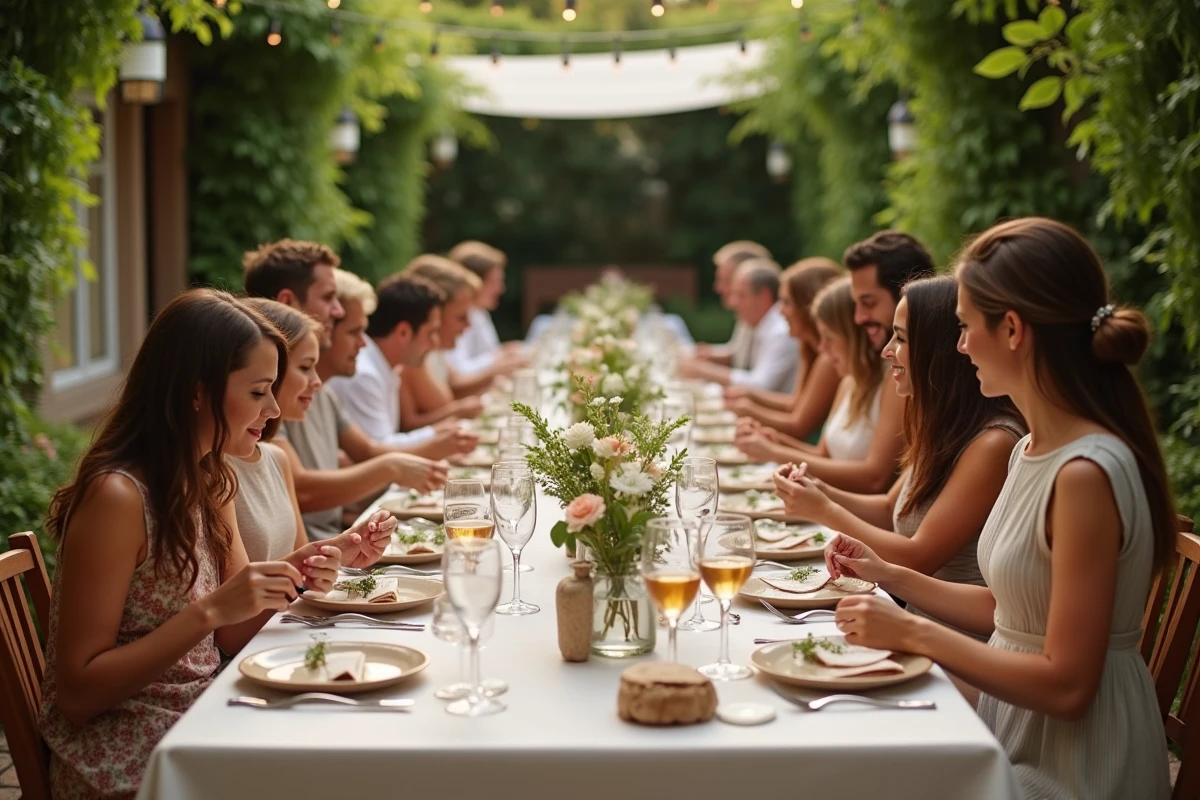
To ensure a smooth organization, structure your seating plan with care and flexibility. Prepare visible place cards as guests arrive in the room. The placement should consider affinities, avoiding too much familiarity or too much distance. Focus on diversity around each table to encourage exchanges while avoiding isolating the more reserved guests.
The head table naturally attracts attention. Place essential people there, but be sure to balance the dynamics around this table: a good distribution fosters conversation and diffuses silences. Also, remember to leave clear passageways to facilitate service and allow guests to move freely to the buffet or relaxation areas.
The decoration contributes to the overall atmosphere. Choose unobtrusive centerpieces to maintain visibility. Personalize each table with a name or a distinctive detail; this helps guests orient themselves and adds a unique touch to the celebration. Lighting should not be overlooked: soft light, a few candles or strings can transform the atmosphere.
For a smooth and enjoyable flow, keep the following points in mind:
- Ensure that each area remains accessible, especially for people with reduced mobility.
- Adjust the sound system to avoid areas where neither music nor speeches can be heard.
- Consider integrating breaks during the meal to allow for discussions and movement.
A well-constructed seating plan promises an evening where everyone feels at their place, where exchanges are natural, and the atmosphere matches the rhythm of the celebration. All that will be left is to enjoy the knowing glances and overlapping conversations, a sign that the magic is at work.